Ever Wong
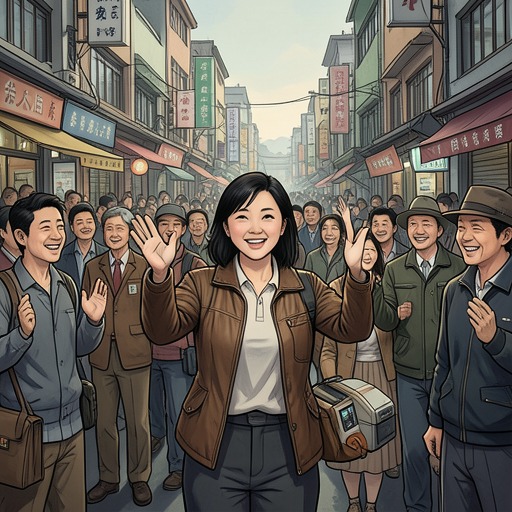
Loveboat, TaipeiEver Wong is the Chinese American protagonist of the novel, and her decisive struggle is not simply between medicine and dance but over who gets to choose the shape of her life. Her parents send her to Taiwan to learn about her culture after she declines a place at Northwestern’s medical program; the summer that follows confronts her with competing ways of defining belonging, obligation, and ambition. Through dance, friendship, and a changing understanding of family responsibility, Ever moves from concealment and uncertainty toward a choice she can call her own.
Identity and Family Background
Ever grows up in Chagrin Falls, Ohio, in a family whose expectations are shaped by migration, education, and a strong investment in her future. Her parents were born in Fujian, migrated first to Singapore and then to the United States, and had planned to visit Fujian with their children, though they never had the money to make the trip. The family’s connection to its origins is therefore present in stories and expectations, but not grounded in Ever’s own experience of visiting the place her parents left.
Her relationship to Chinese language and culture has included difficulty and shame. She recalls dropping out of Chinese school in second grade after her teacher said she had the fluency of a two-year-old; her parents eventually accepted that continuing the classes was too painful. When her mother announces that she and Ever’s father have enrolled her in a program in Taiwan, she presents it as time for Ever to learn her culture. For Ever, the announcement lands not as a long-awaited reunion with a familiar heritage but as a demand that she enter a relationship with something she has largely kept at a distance.
The name Ai-Mei brings that distance into focus. On the drive from the airport, counselor Chen Li-Han checks Ever off using her Chinese name, which means love and beauty. Ever recognizes it as the name given by her grandfather, the only person who used it in everyday life; he died when she was four. The name is intimate and inherited, yet unfamiliar in practice, much like the cultural belonging the Taiwan trip is supposed to cultivate.
From Concealment to Taiwan
Before the trip, Ever’s choices have already diverged from the plan her parents appear to expect. In a letter dated May 1, she marks the option declining Northwestern’s offer, despite the form also presenting an acceptance option and a $500 deposit. When her mother arrives unexpectedly with news about the Taiwan program, Ever hides the letter behind her back. The contrast between the concealed decision and her mother’s announcement establishes the central conflict before Ever has openly explained either choice to her family.
Ever has won admission to Tisch, and she tells Megan during dance practice. Megan drops the poles she is holding and embraces her; the news is met as an achievement rather than a secret. But at home Ever does not tell her mother about that future. On the way to Taiwan, her mother reveals the program, and Ever’s response—asking whether it is really in Taiwan—registers how suddenly her parents’ plan has displaced the future she was trying to keep private.
At Chien Tan, Ever experiences belonging as both relief and loss. In a shopping mall, she had sometimes noticed people turning to look at her family; among the young Asian Americans in Taiwan, her Asian Americanness seems to disappear, a relief she did not expect. Yet fitting into a crowd does not automatically make her feel culturally at home. When Sophie Ha calls her a Twinkie after introducing her to bubble tea, Ever understands the label as an accusation that she is white inside and Asian outside. She is not angry so much as defeated: even among Chinese Americans, she feels insufficiently Chinese, and the moment sharpens her longing for her younger sister, Pearl Wong.
Belonging, Family, and Relationships
Ever’s place within Asian American identity is unsettled rather than fixed. In a conversation about identity, Sophie says she is Asian American and partly Korean; Ever admits that she has not thought much about how to describe herself. She has considered herself American and previously wanted little to do with her Asianness. The setting in Taiwan makes that earlier distance newly visible, but does not resolve it by simply supplying a ready-made identity.
Meeting Rick Woo’s relatives brings Ever’s family history into a different kind of comparison. When Aunty Claire asks whether her parents have lived in Taiwan long, Ever explains that her family is not from Taiwan and traces her parents’ migration from Fujian through Singapore to the United States. Aunty Claire responds by praising immigrant parents as brave and smart and connecting their children’s success to their genes and upbringing. Ever’s account thus enters a conversation in which family migration is treated as both a history and an explanation for achievement, even as her own family’s history differs from Rick’s.
Ever’s familiarity with Rick predates Taiwan and is bound up with comparison. Her father reads the World Journal, and Ever recalls finding articles about Rick, identified in the paper as Woo Guang-Ming, on her pillow. Her parents kept a thicker file on Rick than on her, and she used to call him Boy Wonder. That history helps explain why her early view of him carries resentment alongside familiarity: Rick has long been a figure against whom family expectations could measure her.
In the present, Ever sees the costs of Rick’s generosity toward his former girlfriend, Jenna Chu. Speaking to Rick’s relatives, she compares him to the giving tree in an American children’s book: he drove Jenna places, stayed up talking with her about her worries, and then finished his own homework. Ever argues that love should involve equal sharing and give-and-take. She also reveals that Rick is trying to transfer to Williams College, while his parents suspect Jenna is pressing him to do so. Rick has not told Ever about the plan directly. Her defense of him is therefore also an interpretation formed from what she has observed and heard; she champions his interests even while acknowledging that she does not like speaking poorly of another girl.
Dance, Choice, and the Ever Wong Plan
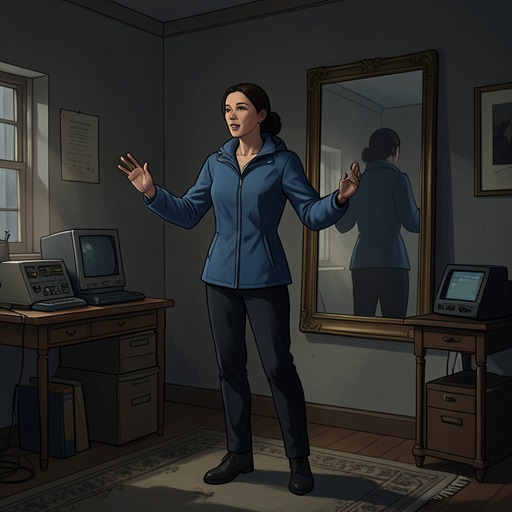
After a difficult weekend, Ever dances alone to music from her radio alarm clock. As the fifth song fades, she describes the moment as a wake-up call: movement gives physical form to something she cannot put into words. The scene changes dance from an extracurricular ambition into a means of understanding herself. It is not a decision imposed from outside, nor an argument she has yet made to her parents; it is an experience of recognizing what matters to her.
Ever turns that recognition into a list in her notebook, titled “The Ever Wong Plan.” Its first aims are relational and practical: sort things out with Xavier Yeh, help him with reading, and learn some Mandarin so she can understand what her parents say in code. She also plans to choreograph an original dance for the talent show, even if she cannot perform in it, and to dance with all her heart until medical school. The list does not initially discard medicine or family connection. Instead, it records several desires at once, including the wish to pursue dance and the wish to repair relationships and understand her parents more fully.
A later addition—waiting for love next time—makes the plan personal as well as professional. Ever writes it after the other five items, then stacks Rick’s socks neatly and smooths the tiny dancing figurines. The ordinary gestures sit beside the written program for her future: care for another person remains in the scene, but so does a deliberate return to her own aims. The plan’s importance lies in this combination. Ever is not simply writing a counter-list to her parents’ expectations; she is trying to arrange a life in which her commitments are chosen rather than assumed.
That renewed commitment extends to other people. After Sophie admits that she printed twenty of Ever’s photographs and does not know where the others have gone, Ever hands her a blue fan and asks whether she would join the dance team. Sophie asks what she would do; Ever answers that she would dance with them. The invitation does not erase the damage between them, but it offers Sophie a place in a shared activity and turns Ever’s dance project into an act of inclusion as well as self-expression.
Ever also asks Xavier to be her dance partner for the talent show. When he jokes about spoiling her show, she laughs, hugs him briefly, and proposes a bo fight. Her idea makes room for his participation on terms that are not conventional ballet performance. Alongside the intention to help him with reading, the invitation shows that Ever’s plans for Xavier include practical support and creative collaboration, not merely a private resolution between them.
Choice and Narrative Significance
The choice at the heart of Ever’s story becomes clearest when she sees her father stranded in the road. A horn continues to blare, and Ever imagines the possible consequences of his being struck. She understands that leaving the curb may put not only that evening’s performance but all future performances at risk. Yet she recognizes the act as a choice: unlike a hand forced by sacrifice, punishment, or guilt, this would be a risk she takes by her own decision. She acts to save her father, and the moment distinguishes freely chosen care from the sense of obligation that has weighed on her.
That distinction informs the later conversation with her parents. Ever sits across from them and says she has thought a great deal in Taiwan; she tells them she will not attend Northwestern in September. Her father removes his glasses, and her mother puts down her teacup. The response makes the consequence of her decision visible before the scene offers any resolution. Ever has not made the choice costless, nor does the evidence suggest that her parents immediately accept it. What has changed is that she states her decision directly instead of hiding it behind her back.
Ever’s arc makes cultural belonging and personal autonomy inseparable but not identical. Taiwan gives her encounters that expose her uncertainty about being Chinese American; it does not make her fluent in the language or automatically at home in the culture. The notebook list, the dance-team invitation, and the choice to tell her parents all show a gradual practice of defining her commitments for herself. Her defining step is not rejecting family responsibility altogether, but distinguishing love freely chosen from a future prescribed in her name.